The performance trap nobody talks about
Here's the thing nobody tells you about orgasm pressure: it's a nervous system hijack. The moment you start watching the clock or monitoring your own arousal like you're tracking a flight departure, your brain literally cannot access the neural pathways required for an orgasm. You become a spectator to your own pleasure instead of living in it.
I see this in my practice constantly. Women describe it as a wall they hit, a moment where everything that felt good suddenly feels mechanical. Men describe it as a shutdown that catches them off guard. Partners describe it as tension in the room they can't name. What they're all experiencing is the same thing: the body's intelligent refusal to perform on cue.
Why pressure kills sensation (the neuroscience part)
When you're focused on speed, your sympathetic nervous system activates. That's the fight-flight-freeze response. Blood flow redirects from the genitals to your large muscles. Cortisol and adrenaline spike. The pelvic floor tenses up defensively, which is the exact opposite of what needs to happen for an orgasm. You're essentially trying to come while your body is physiologically prepared to run from a tiger.
Add a partner watching, waiting, or hoping, and the stakes feel impossibly high. Add your own internal clock saying "this is taking too long," and you're battling yourself. Neither of these conditions creates pleasure. Both kill it.
The weird part: this doesn't mean you're broken. It means you're human. Your nervous system is doing exactly what it's supposed to do when it detects threat. And for many people, being rushed or observed while vulnerable registers as a threat.
The lemon vibrator advantage when speed is the pressure
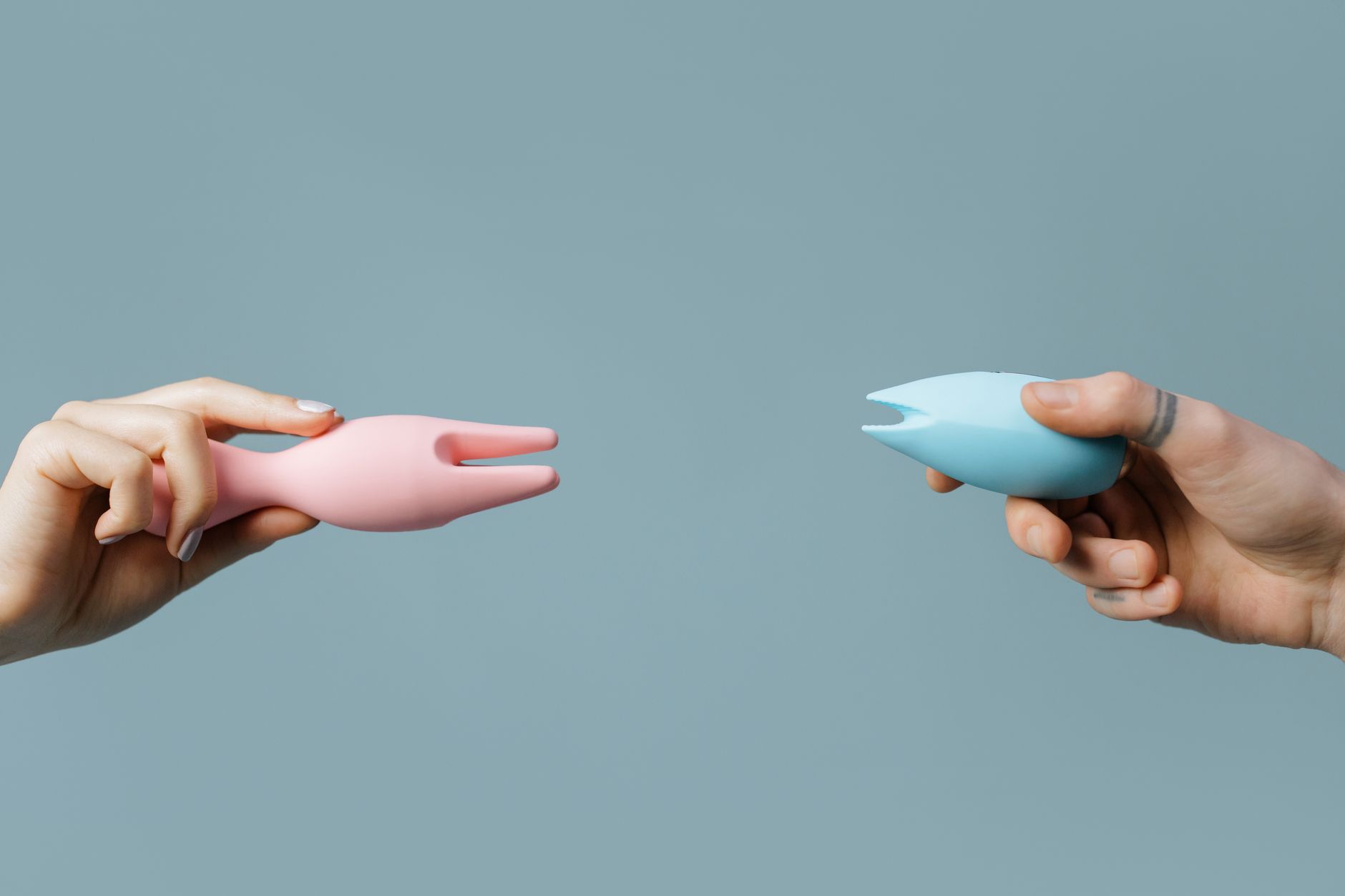
Lemon clitoral vibrators work differently from traditional vibrators in a way that's genuinely useful here. They use air-suction technology, not friction. That distinction matters because suction creates a rhythmic pattern your body can settle into without escalating intensity.
With traditional vibrators, you're often racing toward a destination: higher settings, stronger vibration, more stimulation. The device itself encourages escalation. Lemon vibrators don't. The sensations stay in a narrower, more sustainable band. Your body can actually relax into the pattern instead of chasing the next level.
That means you can practice pleasure without the narrative of urgency attached. You're not building toward something. You're experiencing something. The difference is quieter than it sounds, but your nervous system notices immediately.
Reframing the conversation with yourself
Before you touch a lemon vibrator, before you touch yourself, the real work happens in what you're telling yourself about what's supposed to happen. If your internal monologue is "I should come by now" or "why isn't this working," no toy is going to override that. You're running code that says failure before you've even started.
The reset I recommend: drop the outcome entirely. Not "I'm going to have an amazing orgasm." That's still performance language. Instead: "I'm going to spend the next 20 minutes finding out what feels good right now." No metrics. No timeline. No finish line.
If an orgasm happens, great. If it doesn't, you've still spent 20 minutes in genuine pleasure, and that's the whole point. Orgasms are a feature of pleasure, not the definition of it.
The 5-breath reset before you start
This is practical. Breathe in for four counts, hold for four, out for four. Do this five times. You're not thinking about much anything, just counting. Your parasympathetic nervous system (the rest-and-digest response) starts to activate. Your pelvic floor relaxes a fraction. Your body shifts from "performing" to "receiving."
Then: grab your lemon vibrator, start on the lowest setting, and spend the first 10 minutes noticing. Not chasing. Noticing. What pressure feels good? What pattern? Where on the clitoris? What if you move slightly or stay completely still? This is data gathering, not racing.
The first time you do this, you might not come. That's okay. You're teaching your nervous system that you're safe, that pleasure doesn't require a deadline, that you're not being evaluated. That takes time to unlearn if you've spent years in a different pattern.
What happens when you have a partner and they're watching the clock
This is harder, because it's not just your nervous system in the room. It's theirs too, often running the same "why is this taking so long" script.
The conversation before the conversation: tell your partner you need them to stop watching for an outcome. Seriously. "I need you to be present without needing anything from me. I need to stop feeling rushed." Most partners don't realize they're creating pressure until someone names it. Once named, a good partner can adjust.
While you're using your lemon vibrator, your partner can be there without watching you like a scientist. They can be touching you elsewhere, talking to you, or simply being in the room while giving you space. The pressure isn't about their presence. It's about their agenda.
If they can't drop the agenda, that's a different conversation. One I'd recommend having fully clothed, with both of you calm, because it's not really about the vibrator.
When medication or trauma adds another layer
If you're on SSRIs or other medications that delay orgasm, or if you're carrying trauma around sex, pressure becomes even more loaded. Your body might have learned that pursuing pleasure isn't safe. A lemon clitoral vibrator can't override that wiring, but it can help you practice what non-pressured pleasure feels like in small doses.
Start even slower than I described above. Use the vibrator for five minutes. No outcome expectations. Just sensation. Build from there over weeks, not days. You're not training your body to come faster. You're teaching it that pleasure can happen without danger, without judgment, without a finish line.
If trauma is active, working with a sex therapist alongside your other therapist makes everything faster and safer. This isn't a solo-project situation.
The orgasm that shows up when you stop looking for it
Here's what usually happens when people actually do this: after two or three sessions of using a lemon vibrator without outcome pressure, something shifts. Not always an orgasm. Sometimes just a deeper pleasure. A quieting of the internal critic. A body that feels like it belongs to you again instead of a project you're trying to fix.
And then, without trying, an orgasm shows up. Often a quieter one than you expected. Not the grand finale you were building toward, but something real and present. Because your nervous system finally felt safe enough to let go.
That's not magic. That's just your body being allowed to work the way it works. No stopwatch. No script. No performance.
What to do with the aftermath
After a session, your instinct might be to jump up and move on with your day. Don't. Lie there for five minutes. Notice how your body feels. Notice your breathing. Notice what thoughts come up. You're not trying to produce anything. You're just letting the nervous system settle back down from arousal. This is called integration, and it's the part that makes the pleasure actually stick neurologically.
Also: write down what you noticed. Not a journal entry, just notes. "Liked pattern 3 more than pattern 1." "Felt tense about the knock on the door." "Orgasm quiet and deep." This data is gold for the next session. You're learning your own pleasure architecture.
Remember that <a href="/blog/how-to-use-lemon-vibrators-when-you-want-more-intense-sensation-and-faster-results">using lemon vibrators requires patience and self-awareness</a>, especially when you're unlearning a pattern as ingrained as performance pressure. You deserve pleasure without the urgency.
FAQ
Why does my body freeze up when I feel someone waiting for me to orgasm?
Your nervous system is registering an audience, which activates the performance response. Add a timeline (or the perception of one), and your body interprets it as pressure. When there's pressure, the parasympathetic nervous system (which controls orgasm) shuts down. This is neurobiological, not a character flaw. The fix is removing the audience or removing the timeline, or both.
Can a lemon vibrator help me orgasm faster if that's actually what I want?
Maybe, but probably not better than you already know how. Lemon clitoral vibrators are best at creating consistent, sustainable stimulation without escalation. If your goal is truly to speed up orgasm, a higher-intensity device might technically get you there faster. But here's the important part: if "faster" is coming from internal or external pressure, solving it with a faster tool just moves the goalpost. The underlying pressure remains.
Is it normal to feel guilty about not coming during sex with a partner?
Absolutely, and it's also completely unnecessary. Your orgasm is not your partner's responsibility, and their pleasure is not your job. When we fuse those two things, everyone suffers. You can have an orgasm-free encounter and still have great sex. You can come and still feel disconnected. The two aren't the same thing.
How long should I use my lemon vibrator before I stop feeling pressured?
It depends on how long you've been in the pressure pattern. Most people notice a significant shift within three to four weeks of consistent, no-outcome-pressure sessions. That's roughly 12 to 16 times of 15-20 minutes each, with no scorekeeping. Your nervous system needs time to believe you're serious about removing the pressure.
What if I orgasm immediately with a lemon vibrator and feel like that's not enough?
That's actually a different problem than pressure, but it's worth noting: quick orgasms are fine. Many orgasms in one session are fine. Orgasms followed by more pleasure are fine. The only problem is if you're measuring yourself against an imaginary standard of how "long" pleasure should take. If you came in two minutes and it felt good, the math worked.
Should I tell my partner I'm using a vibrator to work through orgasm pressure?
That depends on your relationship and whether you share a bed, house, or life. If you're having sex together, transparency generally helps. You don't need a graphic description: "I'm learning to experience pleasure without pressure, so I'm exploring some things solo to understand my body better." If your partner respects you, they'll respect that. If they don't, that's information too.
The bottom line
Orgasm on your timeline is a form of autonomy. Reclaiming it means using <a href="/blog/why-lemon-vibrators-work-better-for-some-bodies-than-traditional-vibrators">lemon vibrators or other tools that support patience instead of speed</a>, but more importantly, it means changing the internal script. The vibrator is just a supporting actor. You're the star of this story, and you don't get to rush through it. Your pleasure deserves your full attention, not your urgency. Start there, and everything else follows.