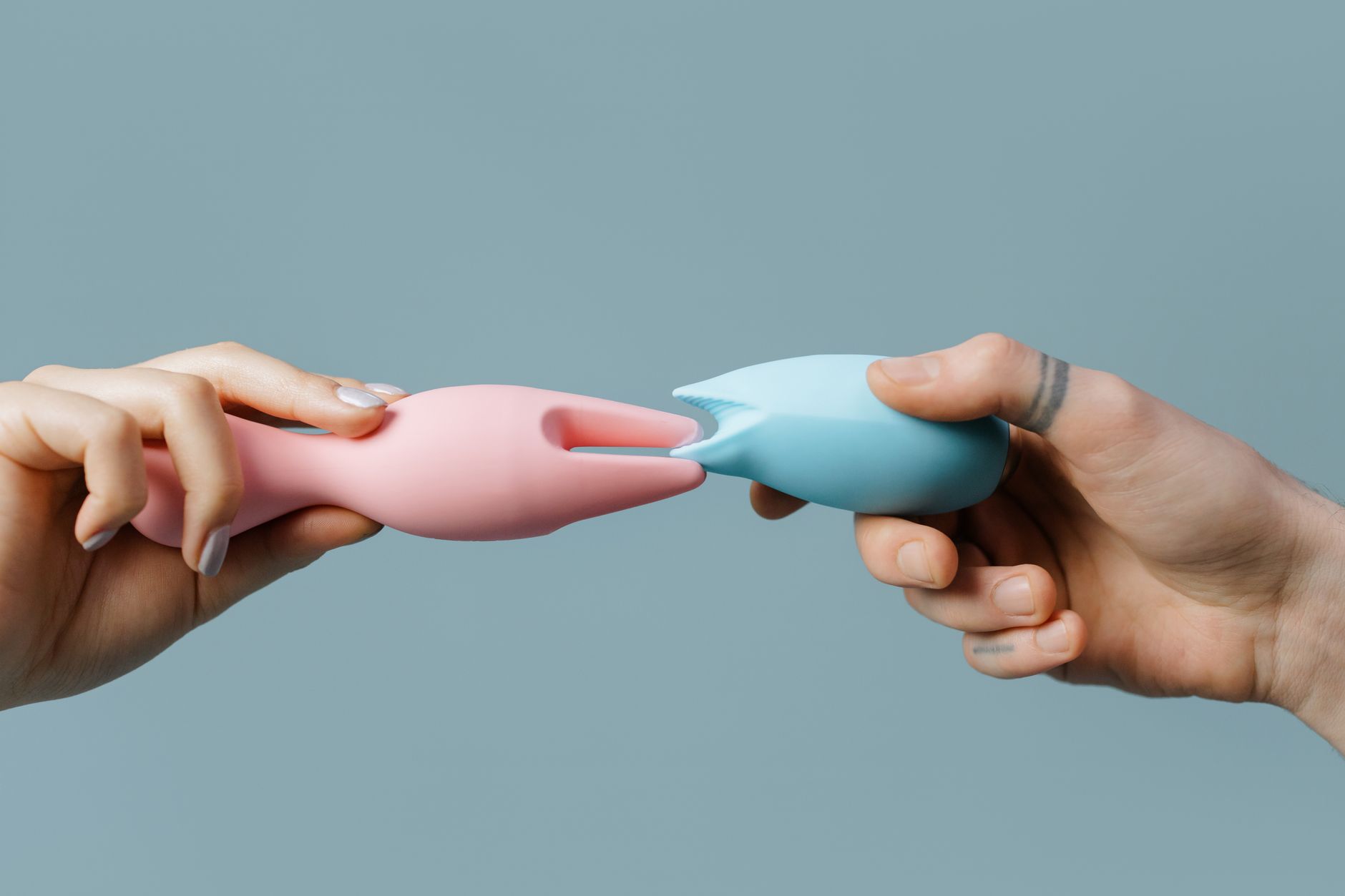
Let's name the real problem
Your partner thinks a toy means you're not satisfied with them. That's the worry underneath. Not that the toy itself is weird or gross, but that it signals something about the relationship. Something missing. And that fear is powerful enough to derail the conversation before it even starts.
Here's what I tell couples in my practice: that fear is not about the toy. It's about whether they still matter.
Why partners get anxious about vibrators
There's a deep (and understandable) narrative in how we're taught about sex. That good partners should be enough. That if you need anything else, it means something's wrong with them. Most people absorb this without even realizing it. Then a partner mentions a toy, and suddenly all of that gets activated.
The anxiety isn't irrational. It's just incomplete. Your partner is responding to a story they've been told about what toys mean, not to what a lemon clitoral vibrator actually does.
A few things make this harder:
- Porn narratives. Toys in porn are often framed as performance aids, not pleasure tools. That plants a seed.
- Generational scripts. If your partner grew up in an era where vibrators weren't discussed, or were treated as shameful, they might genuinely not know that couples use them together.
- Unspoken performance pressure. A lot of partners are already anxious about being "good enough" in bed. A toy can feel like proof of failure.
- Vulnerability gap. If you haven't talked openly about pleasure before, bringing this up can feel like you're suddenly exposing a gap in intimacy.
None of this means your partner is wrong or immature. It means you're both working with incomplete information and a lot of inherited shame.
How to frame this so it lands
Don't lead with the toy. Lead with desire.
Instead of: "I want to try this vibrator because my orgasms take forever."
Try: "I've been thinking about how we can both feel more pleasure together. There's something I want to explore, and I'd really like your help."
The difference is subtle but critical. The first frames the toy as a solution to a problem. The second frames it as a shared exploration. One feels like a criticism. The other feels like an invitation.
Then, be specific about what you actually want:
- "I'd love to use this during sex so I can orgasm while you're inside me."
- "I want to try this together so we can both get off, and then we have more time to spend on each other."
- "This would help me get to climax faster, which means more time for what you love."
Notice what's happening here. You're naming the benefit to them, not just to you. You're showing that the toy gets you both where you want to go faster.
What to do if they say no (or "I don't know")
Listen to what's actually underneath.
"I don't know" often means "I'm uncomfortable but I don't want to say why." That's worth exploring. Ask gently: "What worries you about it?" and then shut up. Let them answer.
Common answers I hear:
- "I feel like I'm not enough." Response: "You're not. You're everything. This is about variety, not replacement. Like how I love you but I also like different foods, different music. This is the same."
- "What if you prefer the toy to me?" Response: "That's not how bodies work. Your touch feels different because it's you. A toy is a sensation. You're irreplaceable."
- "It feels weird / emasculating / not normal." Response: "I get that it feels new. Most things do at first. I'd like to try it together because I trust you. And because what we do in private is between us. We get to decide what's normal for us."
- "I just need time." Response: "That's fair. No rush. Can we circle back in a few weeks?"
If your partner stays firm no, you have a choice: you can drop it, or you can look at whether this is actually about the toy or about a deeper pattern where your needs get sidelined. That's a bigger conversation, and it might warrant talking to a therapist together.
How to introduce it in the moment
Assuming your partner has agreed (or at least stopped actively resisting), here's what actually works:
Don't spring it during sex. Talk about it before. "I'm going to use this while we're together. I want you to see what happens, maybe help me."
Start slow. Use it solo first while your partner watches. This is less intense than diving straight in. They get to see that it's not scary, that you're still you, that nothing is being replaced.
Then hand it to them. Let them control it. This is crucial. When your partner is the one operating the lemon vibrator, they feel the power and the connection. They're not being replaced. They're participating.
Talk during it. "That feels so good." "I love this with you." "This is hot." Narrate what's happening. Remove the silence that breeds fear.
After, talk about it. "Thank you for trying that with me." "I loved having you be part of that." "What did you think?" This cements that it was a shared experience, not a solo performance that happened to include them.
When insecurity is about something else
Here's something I see a lot: the partner says they're worried about the toy, but what they're really worried about is that sex has become routine. Or that you're pulling away emotionally. Or that they've been neglecting intimacy and now suddenly you want to spice things up.
If your partner's insecurity feels disproportionate, or keeps resurfacing even after you've introduced the toy, it might be worth asking: "Is this actually about the vibrator, or is something else going on?" Sometimes the toy is just the visible problem. The real problem is "I feel disconnected from you" or "I've been depressed and sex has taken a backseat."
A lemon clitoral vibrator can help rebuild physical intimacy. But it can't fix emotional distance. That needs a different kind of conversation, and possibly professional support.
The partners who surprise you
Some partners get anxious at first, then become the ones driving the conversation forward. They realize that toys aren't threatening. They're tools. They like knowing you feel good. They like the permission to explore together.
Other partners realize that their insecurity was masking something: maybe they were never really comfortable with pleasure in general. Or maybe they've been operating from a scarcity mindset ("if you're satisfied here, you'll leave me") that runs deeper than the toy.
Most couples who move through this together end up closer, not further apart. You've had a vulnerable conversation. You've learned something new about each other. You've created a boundary where your pleasure matters.
That's not threatening. That's intimate.
FAQ
What if my partner asks if I masturbate with the vibrator without them?
You get to answer this however feels right. But a honest answer usually works better than deflection. If you do: "Yes, sometimes. Just like I masturbate with my hand. It's different from partnered sex. Both exist." If you don't: "Not really, I prefer us doing this together." Either is fine. The key is that you're not hiding.
Can I use a lemon suction toy if my partner is worried about pain or injury?
Lemon vibrators and lemon clitoral suckers are designed to be gentle and precise. They don't cause injury. You might show your partner the product information, or let them hold it and see how softly it operates. Reassurance comes from familiarity.
Should I ask permission to use lemon vibrators or just go ahead?
If you're in a relationship, asking is about respect and honesty, not permission. Frame it as "I'd like to explore this with you" not "Can I do this?" You're not asking for approval. You're inviting them into something you want to experience.
What if we buy it and then he never wants to use it again?
That's okay. People change their minds. The toy doesn't have to be a regular thing. It can be something you try once, or twice a year, or never again. The point isn't that you use it constantly. The point is that you're both comfortable with it existing and exploring together when the mood strikes.
How do I bring this up without it feeling like an attack on our sex life?
Lead with curiosity, not criticism. "I've been thinking about new things we could try" is different from "Our sex life is boring." One invites exploration. The other puts them on the defensive.
Will using a toy make my partner less interested in sex with me?
No. The opposite usually happens. Sex becomes less about performance pressure and more about pleasure. Most couples who introduce toys report more frequent, better sex overall.
The real truth
Your partner's insecurity about toys isn't really about toys. It's about whether they matter, whether your pleasure matters, whether the relationship is still alive and evolving. When you move through this conversation honestly, you're answering all three questions at once. You're saying: you matter, my pleasure matters, and I want to build this with you. That's the frame that changes everything.
If you're ready to explore but not sure how to start the conversation, reach out. We're here to help.